
Blood Orange
precious orbs of winter sun

There is something very romantic about a blood orange. Plucked from the sun-kissed slopes of Etna, packed into crates and shipped into the darkest depths of winter across Europe, their mottled, sunset-hued skin feels like a symbol of hope. It’s as if each orange encases a little chink of Mediterranean sun, reminding us of warmth and light and everything there is to look forward to in months to come. Call me crazy, but I feel like you can actually taste it too: in every bite of blood orange (I don’t think I’ve ever had a bad one) there is an intense, sweetly citrussy burst of sunshine. This, and the cheery colour, are what see my fruit bowl heaped with them from January through to early March.


Anyone who’s been around long enough here will know that I used to structure my weekly substacks around individual, seasonal fruit and veg: A Crown of Rhubarb, The Humble Leek… the archives go on. It was once (wisely) pointed out that I would eventually run out of ingredients, but luckily, the format of my ramblings evolved before I ever got close to this point. Suffice to say, blood orange never received its weekly spotlight, so today, I’m putting this to right.
Sicilian blood oranges are a group of pigmented sweet oranges grown around Mount Etna. Distinctive in their deep red to burgundy flesh, they are a rare European phenomenon — not because oranges are scarce, but because this particular alchemy of colour, flavour and intensity happens almost nowhere else. Their drama is not accidental. It is the product of stress, of extremes: volcanic soil rich with minerals, bright Mediterranean sun by day, and cold winter nights that drop sharply once the sun disappears behind Etna’s slopes
It is this sudden nocturnal chill that performs the real magic. Blood oranges are one of the only citrus fruits to produce anthocyanins, the same pigments responsible for the inky skins of blackberries and the blush of red grapes. Citrus, ordinarily, doesn’t do red. But under cold stress, the fruit responds defensively, producing these pigments as protection. Which means that the blood orange’s colour — that startling claret flesh, sometimes streaked, sometimes almost black — is not just beautiful, but a record of winter itself.
This is why blood oranges taste the way they do. Sweeter than a standard orange, yes, but also deeper and more complex. It’s a fruit that feels half-berry, half-citrus, and entirely out of place but entirely welcome in a grey, London kitchen.
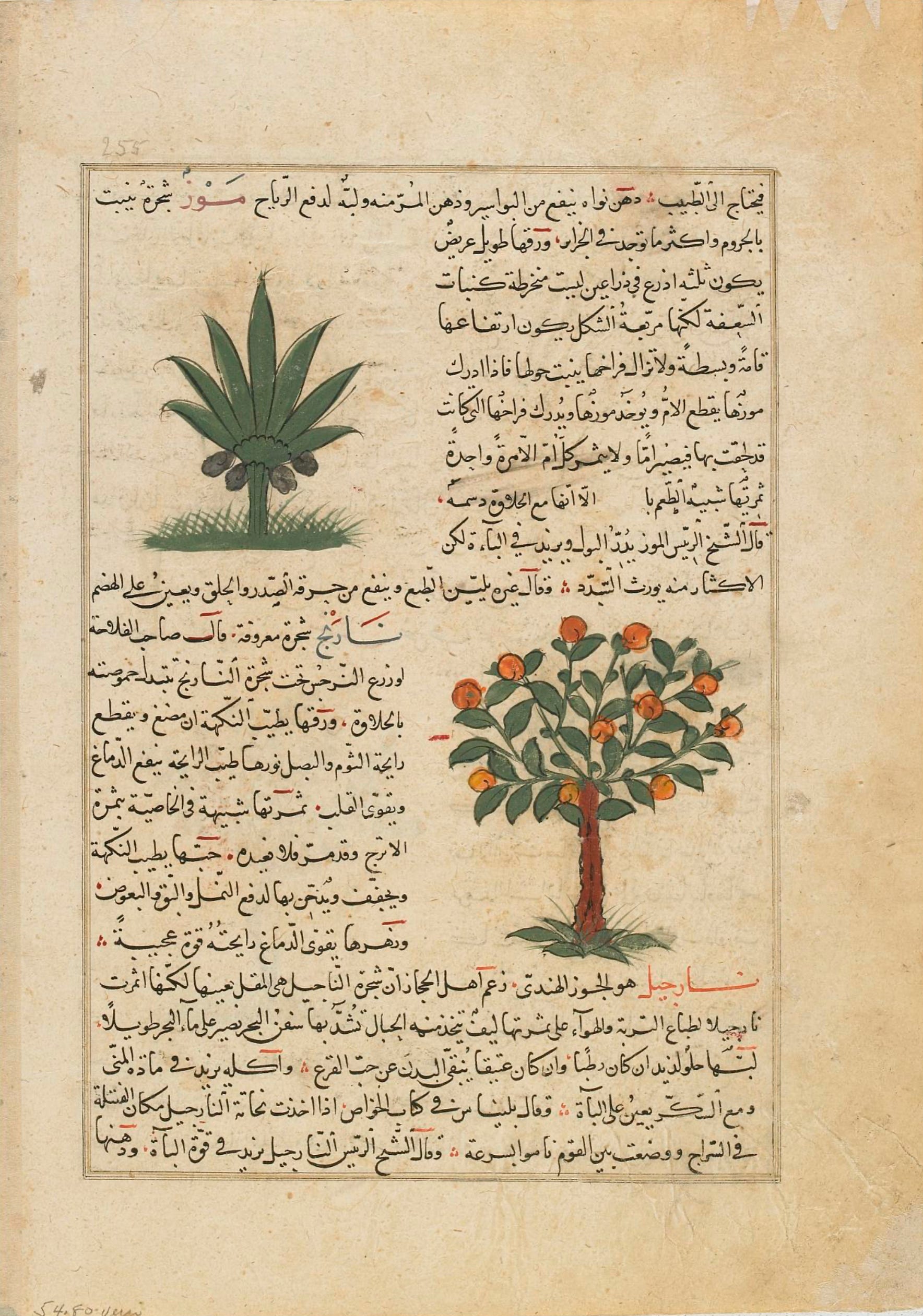
Historically, citrus arrived in Sicily via Arab trade routes between the 9th and 11th centuries, when the island was a crossroads of Islamic, Byzantine and Mediterranean cultures. Bitter oranges and citrons came first, and sweet oranges followed later. The blood orange itself appears surprisingly late in the historical record, emerging in Sicily sometime in the 18th century as a natural mutation - one that simply happened to find the perfect conditions to thrive. From there, it became a quiet emblem of the island: exported north as a luxury, eaten locally with reverence, bound tightly to the rhythms of winter.
I think it is partly their fleetingness that makes them feel so romantic. Blood oranges arrive (and all too swiftly depart) when we most need reminding that abundance still exists, even in the leanest months. They are proof that beauty can be coaxed from cold, that flavour can deepen under pressure, and a reminder that somewhere, a thousand odd miles away, the sun is shining on the orange groves.
And now — probably the bit you’ve all been patiently waiting to get to — I’m sharing two ways that I’ve enjoyed blood orange in my kitchen this week. Firstly, in a Sicilian-inspired salad with fennel, kalamata olives and anchovy, secondly in a cheat’s no-churn ice cream, paired with fresh ricotta.
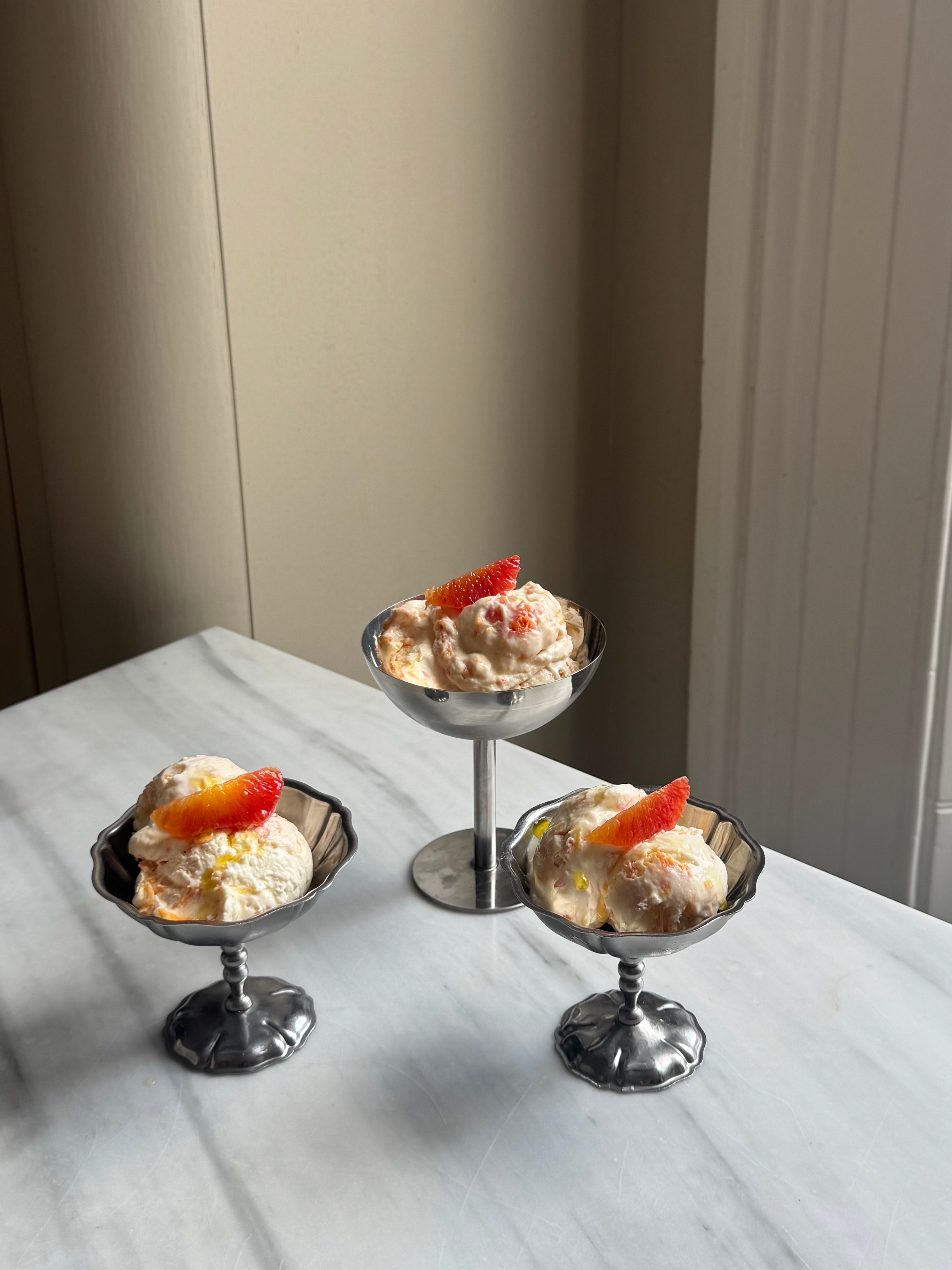
No-churn Blood Orange and Ricotta Ice Cream
makes about 500ml
3 blood oranges
2 tbsp caster sugar
300ml double cream
175g condensed milk
200g fresh ricotta
a drizzle of extra virgin olive oil, to finish (optional)
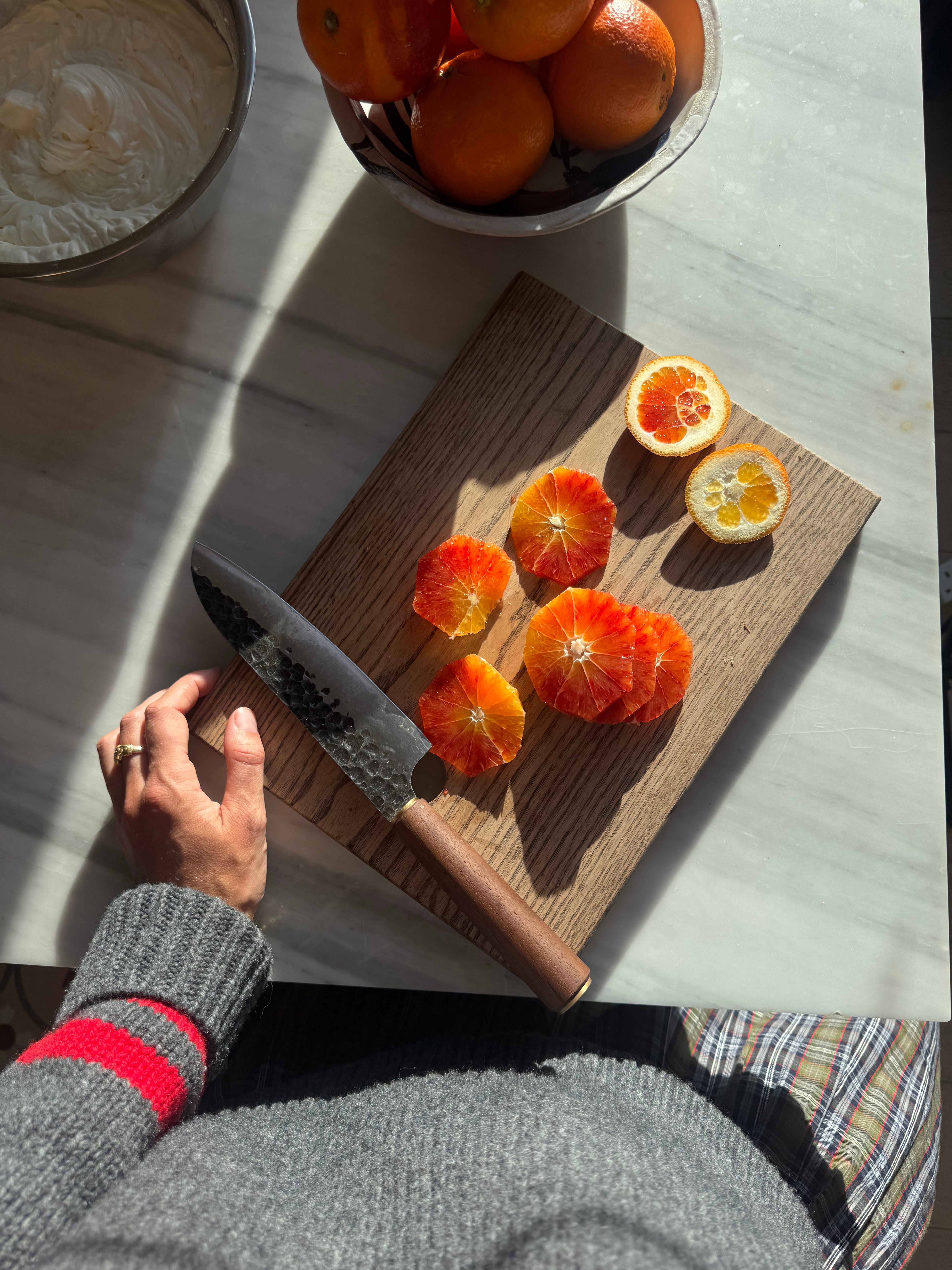
Using a sharp knife, slice off the top and bottom of the orange to expose the flesh. Stand the orange upright on a chopping board, then carefully cut away the peel and white pith in downward strips, following the curve of the fruit, until all the skin and pith are completely removed. Check for any remaining pith and trim it away. Once peeled, slice the orange crosswise into neat rounds. Repeat with the remaining oranges.
In a small saucepan, combine the orange segments and sugar over medium heat. Bring to a gentle simmer and cook for 25-30 minutes, stirring occasionally, until the liquid is reduced. Set aside to cool.
In a large bowl, beat the double cream and condensed milk together until the mixture resembles whipped cream, then add the ricotta and beat until smooth.
Once the blood orange compote is cooled, stir gently through the cream mixture.
Transfer to a container, cover with a lid and freeze.
Remove from the freezer about 15 minutes before you want to serve, to allow it to soften slightly. Finish with a slice of blood orange and a drizzle of evoo, if desired.
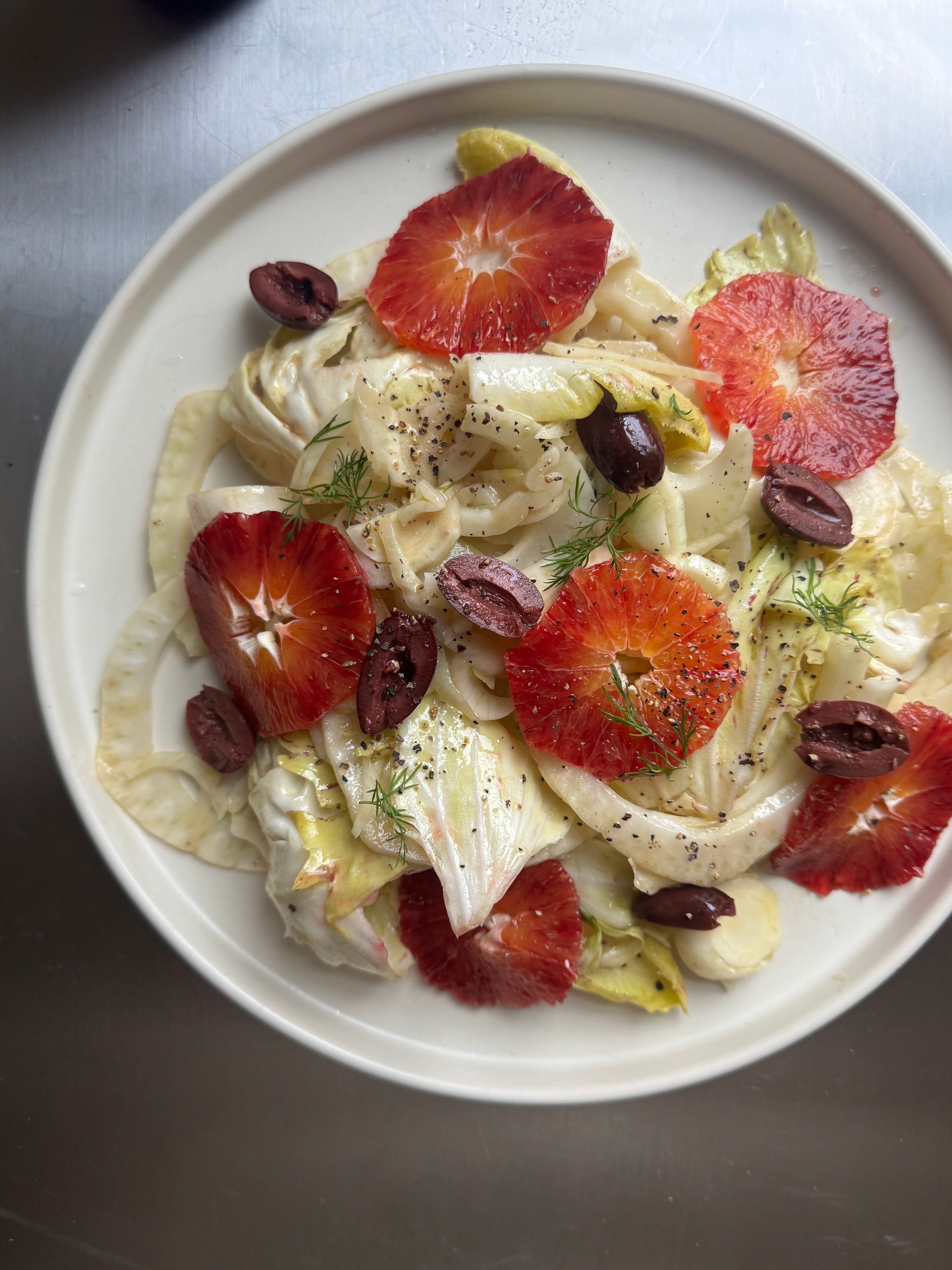
Blood Orange, Fennel and Kalamata Olive Salad
serves 2 as a generous side
for the salad
1/2 bulb fennel, finely sliced
1 small endive, leaves separated
1/4 head of castelfranco, leaves torn
1 blood orange, peeled and finely sliced in cross sections
a handful of pitted kalamata olives, halved (I used Odysea)
a crack of black pepper
fennel fronds or dill leaves, to garnish (optional)
for the dressing
2 tbsp extra virgin olive oil
1 tbsp red wine vinegar
1 tsp dijon mustard
1/2 tsp anchovy paste (or an anchovy fillet, finely diced)
Start with the dressing. In a small bowl or jug, whisk together the olive oil, vinegar, mustard and anchovy paste until smooth.
Combine the first three salad ingredients in a large mixing bowl and toss well with the dressing. Transfer to a serving plate and top with the sliced blood orange and kalmata olives. Finish with a sprinkling of black pepper and some fennel fronds or dill leaves for garnish.
Thank you so much for reading! If you liked the recipe (or the ramblings) I’d love to hear your feedback 💛 and please do share the love using the link below.