
Cavolo Nero
a regal Tuscan kale

I recently shared a recipe on Instagram for cavolo nero pasta e fagioli—a hearty, starchy Italian stew I grew up eating during the winter months. When an inquisitive follower asked me what exactly cavolo nero was (an ingredient I’ve always taken for granted thanks to my Italian mother), it struck me that I hadn’t written one of my ingredient-focused Substacks in quite a while.
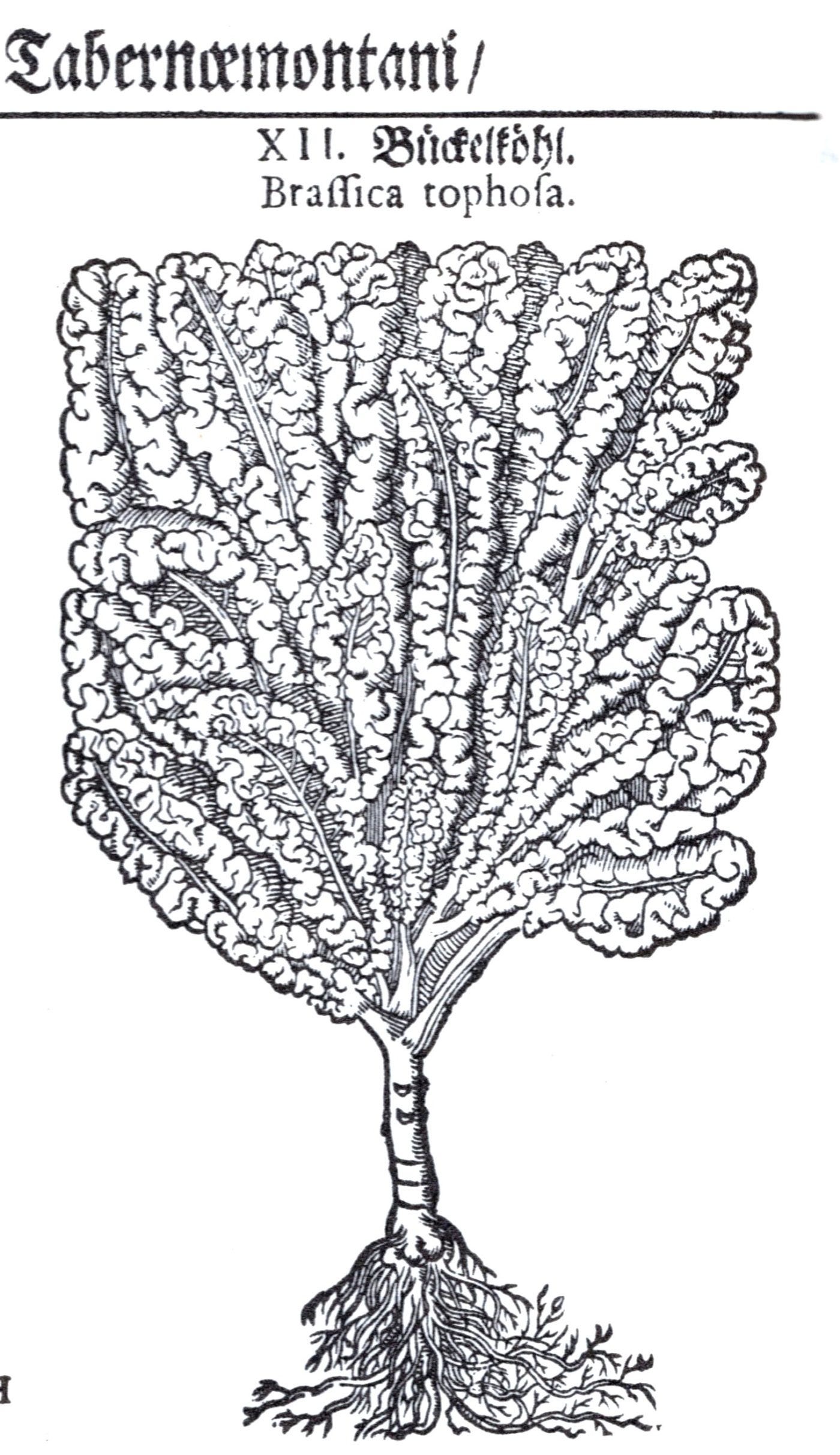
Cavolo nero—also known as Tuscan kale, Lacinato kale, or, as a friend recently informed me, the adorably named dino kale—is a dark green, leafy vegetable belonging to the Brassica family. It’s distinguishable by its long, blistered-looking, almost blackish leaves, whose color explains its common name: cavolo nero translates to black cabbage in Italian. It has an earthy and ever-so-slightly bitter taste, mellowing when cooked into a delicately nutty flavor. I love it for its texture: its knobbly, calloused surface softens with heat, wilting like a spinach leaf but still holding a lovely, chewy bite.
Cavolo nero originates from the Mediterranean region and has been cultivated in Tuscany for hundreds of years as an integral part of traditional Tuscan cuisine. Traditionally, it has been considered a “peasant food,” prized for its resilient nature and ability to withstand the cold winter months. It is the leaf that cheers up the December vegetable patch to no end. In Norfolk, where my partner’s mother grows it, it stands resolute beside the columns of Brussels sprouts—the only two plants hardy (or foolish) enough to brave the searing frosts. When everything else is tucked away beneath the ground or waiting patiently for spring, it offers a shred of brazen green hope. (Okay, I might be slightly overdramatising here, but I feel very strongly about its positive veg patch presence.)
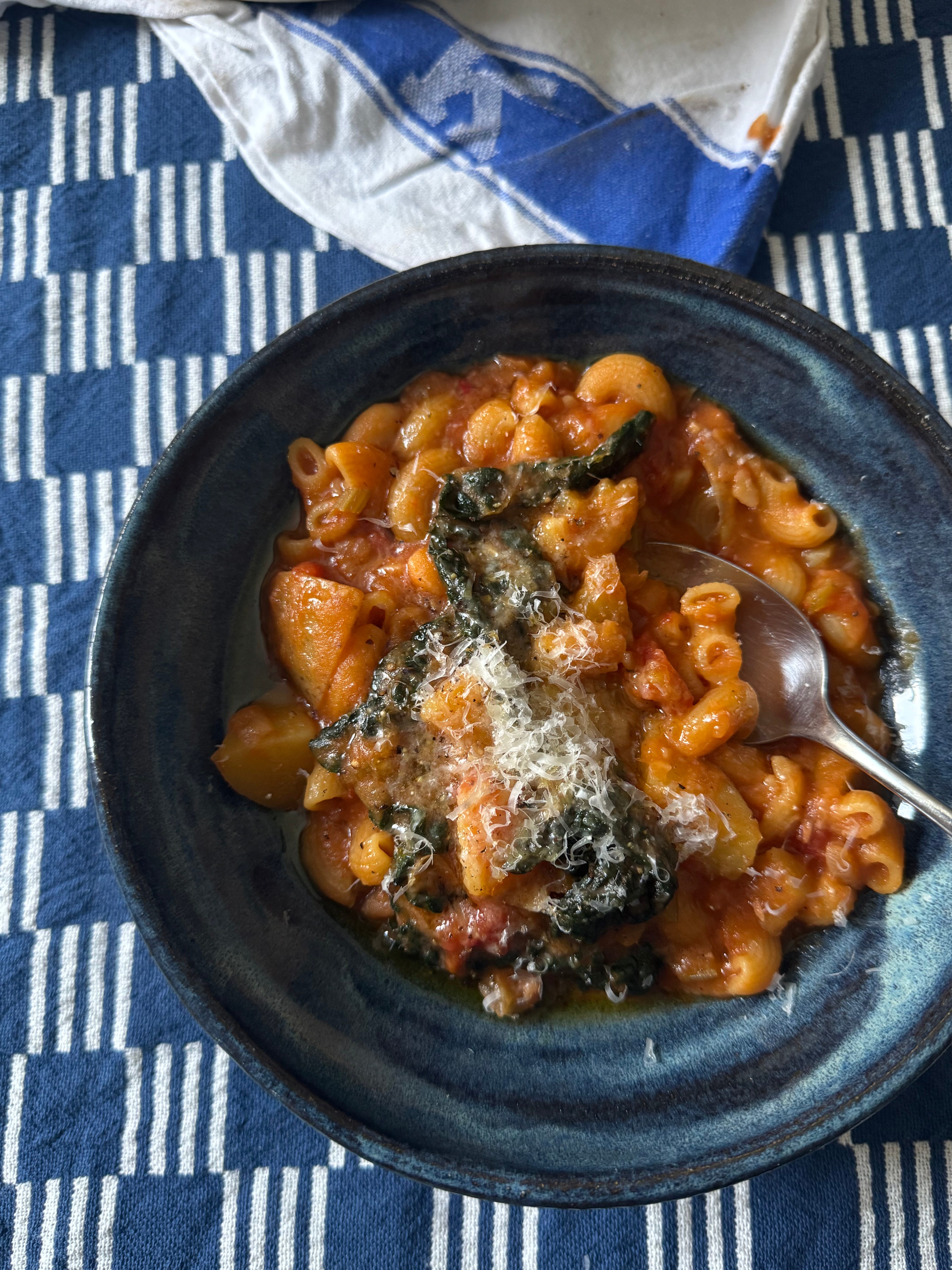
I’d fully intended for the following recipe to be classified as a soup. I had a few stalks of cavolo nero languishing in my fridge and a hankering for a warming, vegetable-forward broth. A cavolo nero minestrone seemed like the obvious answer to my craving. However, the more I rummaged through my fridge, the more lonely-looking ingredients I turned up—each loose potato, carrot, and celery stick beckoning to my stew. And so, it grew starchier and starchier until I found a handful of pasta making its way into the pot. Minestrone went out the window, and a pasta e fagioli was born.
Cavolo Nero Pasta e Fagioli
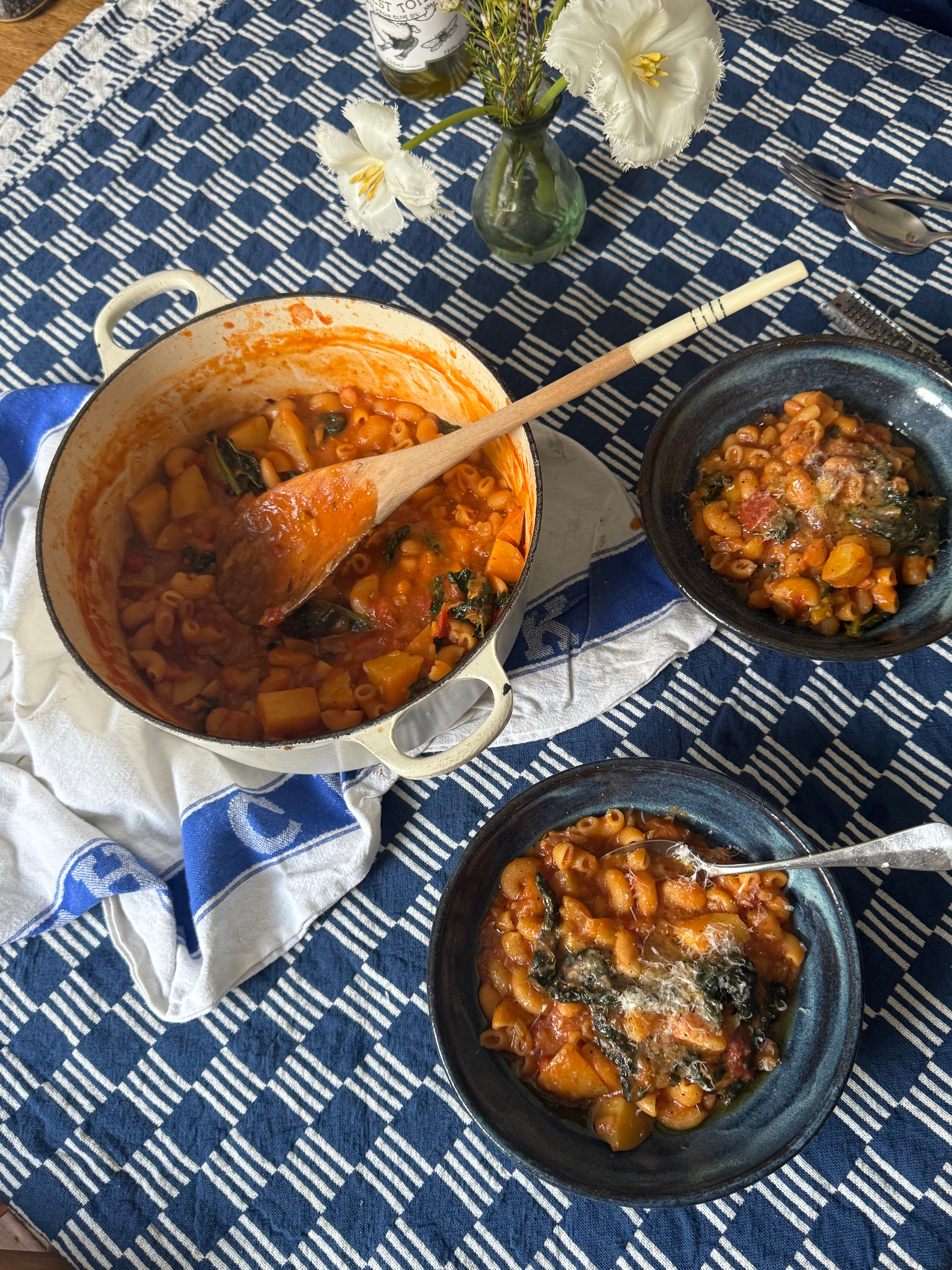
Serves 8
2 tbsp olive oil
3 shallots, finely diced
3 celery sticks, finely diced
3 bird’s eye chillies, finely sliced
4 anchovy fillets
4 cloves garlic, finely diced
2 tins tomato polpa
1 bay leaf
800ml fresh chicken stock
500g potatoes, chopped into bite-sized pieces
600g jarred cannellini beans
200g cavolo nero
200g short pasta (I used Chifferi Rigati)
Parmesan, to finish
Extra virgin olive oil, to finish
Black pepper, to taste
Salt, to taste
In a large pan with a lid, heat the olive oil and fry the shallots and celery over medium heat, stirring occasionally. Once softened and translucent (roughly 10 minutes), add the anchovy fillets, chilli, garlic, and a pinch of salt. Cook for a further 2 minutes, using a wooden spoon to break down the anchovies as they melt.
Add the tomato polpa, stir, and cook until bubbling. Pour in the chicken stock and bring to a gentle simmer. Cook for 10 minutes, stirring occasionally.
Add the chopped potatoes and cover the pan with a lid. Lower the heat and cook for 35 minutes, or until the potatoes are tender when pierced with a fork.
Add the beans and, once warmed through, use a hand blender to partially blend the soup. You want to maintain texture and bite but also thicken the soup with the lovely bean puree.
Add the cavolo nero and pasta, cooking according to the pasta’s packet instructions for al dente. Remove from the heat (it will continue cooking in the pot) and serve with a generous mound of Parmesan, a crack of black pepper, and a drizzle of good olive oil.
Thank you so much for reading! If you liked the recipe (or the ramblings) I’d love to hear your feedback 💛and please do share the love using the link below.